
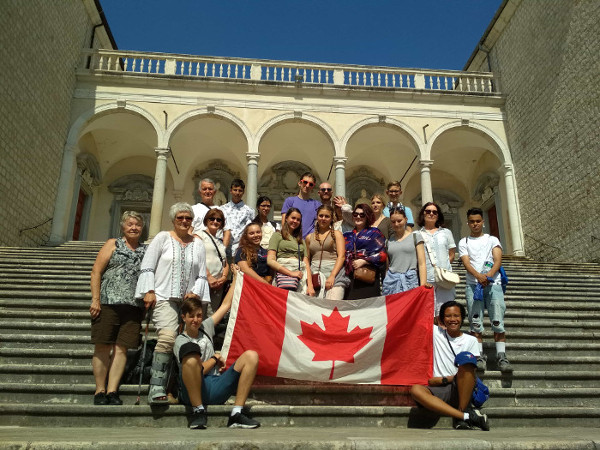
Canadians in Cassino Battlefield Tour with a WWII historian and tour guide: ESSENTIAL INFORMATION ABOUT THIS TOUR
- TOUR DURATION: Approximately 3 to 3.5 hours (from 10:00 a.m. to 1:30 p.m.)
- TOUR PRICE: €90 per person
- YOUR TOUR GUIDE: Anna Maria Priora
- MAXIMUM GROUP SIZE: 12 people
- TRANSPORTATION: 1 or 2 vans
- NOT RECOMMENDED FOR YOUNG CHILDREN
- ITINERARY:A guided tour lasting approximately 3 hours and 30 minutes of the most significant American World War II sites in the Cassino area:
- “Whiskey” point on the Monte Trocchio
- Oxford Bridge and Captain Anthony Kingsmill’s Bridge
- London Bridge and the Pease Bell
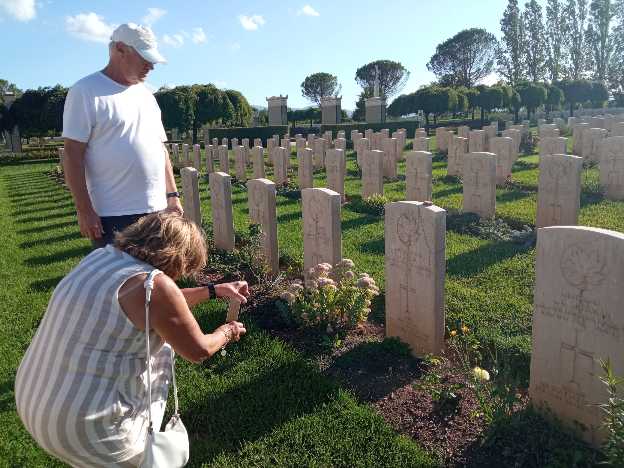
- The Commonwealth war cemetery
- Cassino town center
- Castle Hill
- The Panoramic point
- The Germans’ caves
- The Abbey of Montecassino.
- REVIEWS: ⭐⭐⭐⭐⭐ (Read them here)
- WHAT ELSE CAN I VISIT NEARBY WITH A TOUR GUIDE?
- San Pietro Infine and the Mignano Pass (Mignano gap and Winterline)
- HOW TO BOOK:
Canadians in Cassino Battlefield Tourwith a WWII historian and tour guide: HISTORICAL BACKGROUND
As Mark Zuelckerecalls in his book The Liri Valley: Canada’s World War II Breakthrough to Rome(July 1943), about 26,000 Canadians landed in Sicily. When the Allies invaded Italy in September, the Canadians, alongside the 8th Army, fought in battles at the Moro River, Villa Rogatti, San Leonardo, Casa Berardi, Cider Crossroads, and Ortona, facing the 90th Panzer Grenadier and the 1st Parachute Division. Due to the challenges the 5th Army encountered on the Winter Line, General Harold Alexander decided to concentrate all Allied efforts on the Gustav Line, stretching from Monte Cassino to Minturno.
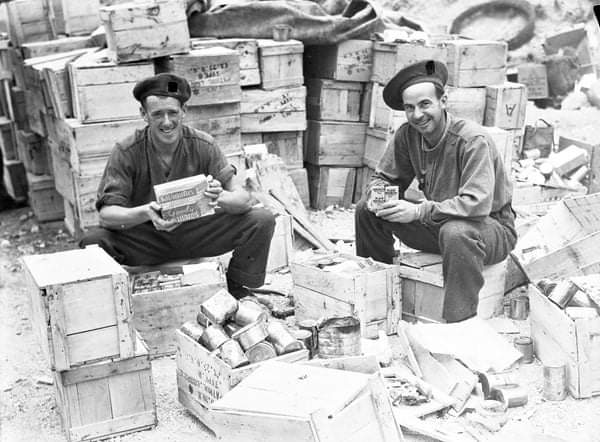
Table of Contents
Operation Diadem on the Gustav Line
Operation Diadem began onMay 11, 1944, with the1st Canadian Corpsplaying a crucial role in the operation’s success. OnApril 18, 1944, the 1st Canadian Corps ceased all radio traffic to maintain secrecy about their location. As a result, the German 10th Army was unable to detect their movements and failed to anticipate the upcoming offensive. Radio communication resumed near Salerno, deliberately misleading the Germans into believing that the Canadians were preparing an amphibious operation..
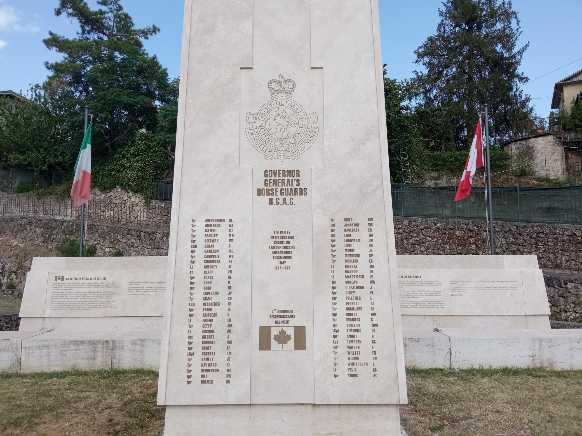
On the Gustav Line for the last battle
During the final battle of Monte Cassino, the role of the1st Canadian Armoured Brigade (1st CAB)was to assist the8th Indian Divisionin crossing the Gari River. The17th Brigadeand Ontario tanks provided direct fire support for the crossing. At 6:00 PM onMay 11, Sir Oliver Leese sent a message to all 8th Army regiments, wishing good luck to the troops. The attack was about to begin! That night, starting at 11:00 PM, the troops were tasked with establishing a bridgehead, expanding it, and clearing a large area around Sant’Angelo.
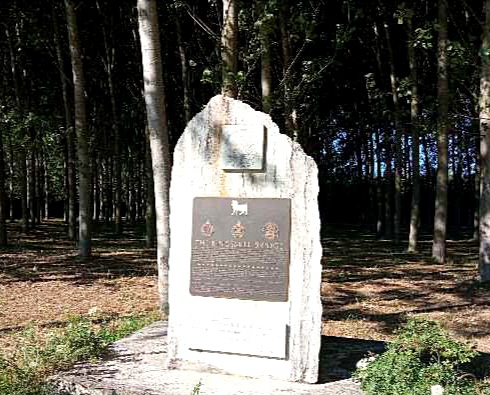
Canadians in Cassino Battlefield Tour: the Canadian bridges on the Rapido River
But at around 3:00 AM, the Calgary Regiment had to abandon construction of the Cardiff Bridge to assist the 8th Indian Division in building the Oxford Bridge. Captain Anthony Kingsmill was already scouting for the best location to build another bridge, which he named Plymouth Bridge. By 9:50 AM, despite numerous difficulties, he came up with a brilliant idea and found a solution to all the problems. On May 13, the soldiers completed the fourth bridge, named London Bridge. This allowed the Canadian tank regiments to cross the Gari River and advance north toward Rome!
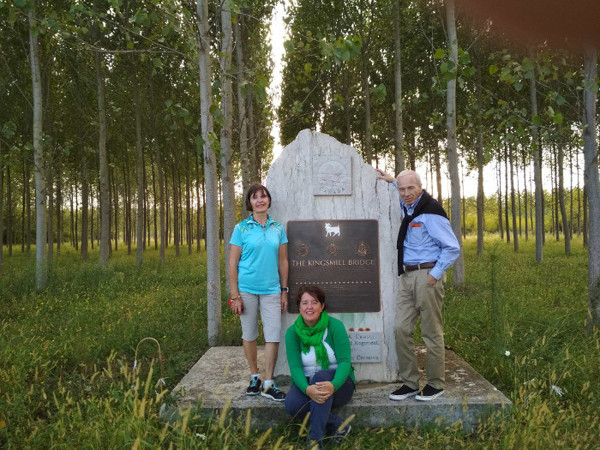
Canadians in the liri Valley: Kingsmill bridge
“In May 2007, a new commemorative plaque was placed along the Gari River (known to the Allies as the Rapido River) to honor a very special person, Captain Tony Kingsmill of Vancouver. The codename of the bridge, built during the Fourth Battle of Cassino in the middle of the Liri Valley, was Plymouth Bridge. However, on this occasion in 2007, it was renamed Kingsmill Bridge in honor of this great man and his actions during the battle. Tony served in the 61st Light Aid Detachment, Royal Canadian Electrical and Mechanical Engineers, of the Calgary Regiment.”
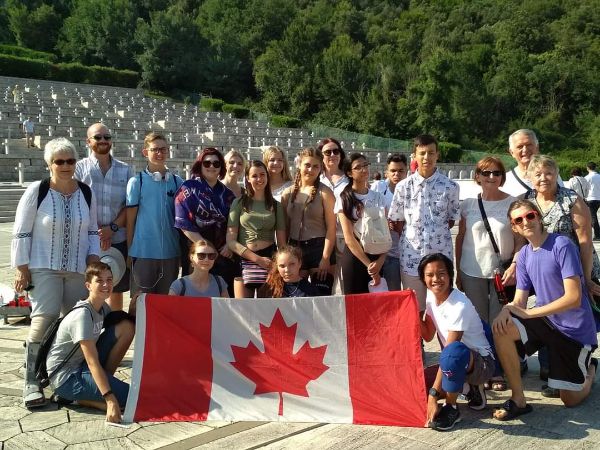
Remembering the Canadians in the Liri Valley
His remarkable achievement was devising a method to transport an 80-foot Bailey bridge on top of a turretless Sherman tank, then position it across the river using a second tank as a pusher to steer the bridge into place. This ingenious idea proved successful, allowing the Calgary Regiment to make the first armored vehicle crossing of the Gari River. It also enabled them to support the infantry of the 8th Indian Division, which had suffered devastating losses and urgently needed a bridgehead on the far side of the river.
Canadian Armoured Brigade of the Calgary Regiment
Kingsmill was responsible for a 30-man unit experienced in repairing and maintaining tanks of the1st Canadian Armoured Brigadeof the Calgary Regiment. This armored brigade was regarded by General Oliver Leese as the best tank brigade in Italy. Having landed in Italy in July 1943, it played a crucial role in the Battle of Ortona in December 1943 and was later sent to Cassino in May 1944.
Canadians in Cassino Battlefield Tour with a WWII historian and tour guide: WHAT TO EXPECT
The “Monte Cassino and Cassino Battlefield tours for Canadians” (about 3 hours) includes:
1) Pickup from the railway station in Cassino every day at 10:00 AM or 2:00 PM (Main Square, near the Green Kiosk)
2)A guided tour lasting approximately 3 hours and 30 minutes of theCanadian most meaningful sites of Cassino:
- “Whiskey” point on the Monte Trocchio
- Oxford Bridge and Captain Anthony Kingsmill’s Bridge
- London Bridge and the Pease Bell
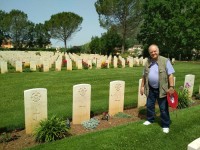
- The Commonwealth war cemetery
- Cassino town center
- Castle Hill
- The Panoramic point
- The Germans’ caves
- The Abbey of Montecassino.
3)return to the railway station in Cassinoat 01:30 PM or 05:30 PM
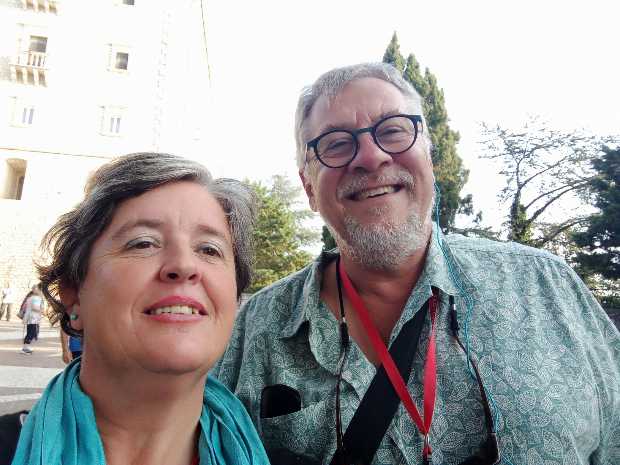
Canadians in Cassino Battlefield Tour with a WWII historian and tour guide: WHAT YOU MUST KNOW ABOUT THIS TOUR
TOUR DURATION: about 3 hours
DEPARTURE TIME: Daily at 10:00 AM and 02:00 PM
MEETING POINT: Cassino Railway Station (Main Square, near the Green Kiosk)
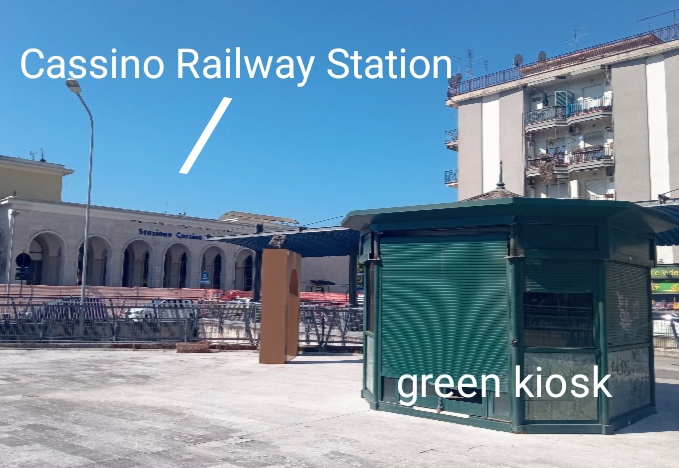
WHAT IS INCLUDED:
- Professional WWII Guidance
- Transportation in a modern van with air conditioning
- Donation to the monastery
WHAT IS NOT INCLUDED: Lunch and dinner are not included
PRICE PER PERSON: 90 euros
PAYMENT:
- No advance payment required
- Payment can be made in cash to your guide during the tour

Monte Cassino Battlefield Tours for Canadians with a WWII historian and tour guide: More Tours Available in This Area
The 88th Division Grand Battlefield Tour ⭐⭐⭐⭐⭐
Monte Cassino Battlefield Tour on the footsteps of the Canadians in the Liri Valley⭐⭐⭐⭐⭐
“Campobasso or Canada Town” Grand Battlefield Tour⭐⭐⭐⭐⭐
Canadians in Cassino Battlefield Tour
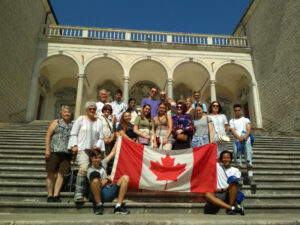
Canadians in Cassino Battlefield Tour held by Anna Priora. Price per person
SKU del prodotto:Canadians1
Brand di prodotto:Monte Cassino War Tours
Valuta del prodotto:Eur
Prezzo del prodotto:90
Prezzo valido fino a:30-12-2030
Prodotto in magazzino:InStock
5