The Liberation Route Hiking Trails: the importante of memory
In 1987, the Council of Europe launched the programme “Cultural Routes of the Council of Europe,” aimed at promoting shared European heritage through thematic routes. One of the routes selected by the EU is the Liberation Route Europe, now developed as the “Liberation Route Europe Hiking Trails.”
This extensive historical trail stretches approximately 3,500 kilometers and passes through eight countries. It begins at the D-Day Landing beaches in France and continues through key sites including Nuremberg, Berlin, and Gdansk.
Along the trail, Memory Markers placed by students commemorate significant events and locations. The route is now expanding southward to include Italy, with Monte Cassino and Cassino becoming important new points on this historic path.
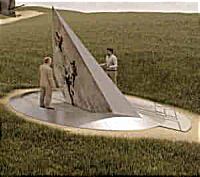
Table of Contents
The Liberation Route Hiking Trails: the project reached Cassino area too
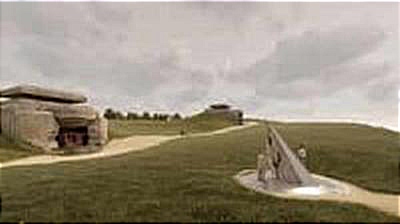
Vectors of Memory are specially designed route markers created by the renowned architect Daniel Libeskind. These markers serve both as directional guides and as informative points that provide historical context and detailed information about significant places along the trail.
Libeskind envisioned placing a Vector of Memory every 5 kilometers along the routes to guide visitors while connecting them to the history embedded in the landscape.
There are four types of Vectors of Memory:
- Storyline Vectors:Introduce an important historical narrative or theme at specific points along the trail.
- Crossroad Vectors:Indicate directions at intersections or trail junctions.
- Wall Vectors:Mark important buildings, museums, or battle sites with contextual information.
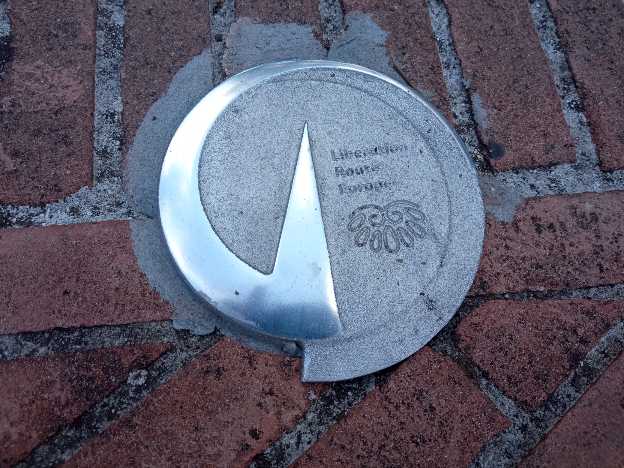
- Floor Vectors:Embedded into the ground to show the direction of the trail and help visitors follow the correct path.
The Vectors of Memory
What is a vector of Memory? They are route markers, designed by the renowned architect Daniel Libeskind, who created four types of markers to put all along the trails with directions and historical background to follow and detailed informations about the place to visit. His dream is to see a vector all along the trails every 5 kilometers. The different vectors of Memory can be:Vectors to introduce an important story linecrossroad vectors to point the directions in crossroadswall vectors to mark buildings, museums, and battlefloor vectors to mark the direction of the trail, to follow.
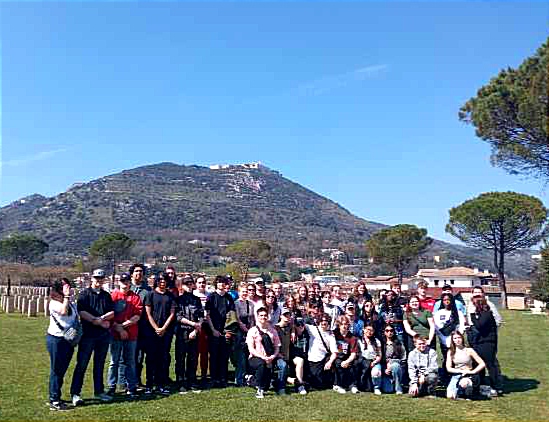
In Italy, the Liberation Route Europe Hiking Trails will connect Sicily, where the Allies landed in 1943 and where visitors can explore several war cemeteries in Catania and the landing museum, to Salerno and Anzio—other harbors with museums—then Ortona and Casoli, as well as Cassino with the Historiale Museum and its war cemeteries, and Monte Cassino with the world-famous Abbey, all the way to Rome.
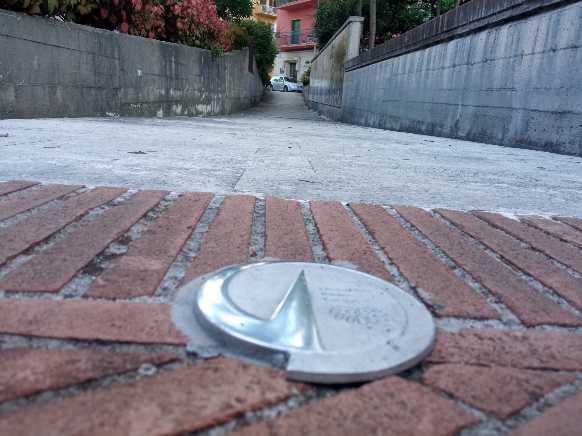
Vectors of Memory
Further north, the Liberation Route Europe Hiking Trails will guide visitors to the most significant sites of the Gothic Line. We can imagine that here in Cassino there will be several Vectors of Memory, as the Battles of Cassino involved many important places, such as Monte Cassino Abbey, the Rapido River crossing, Castle Hill, and various nationalities—all commemorated in the Commonwealth War Cemetery, the Polish War Cemetery, the German Cemetery, and the local War Museum, called the Historiale Museum.