Table of Contents
Visiting San Pietro Infine: HISTORICAL BACKGROUND
While visiting San Pietro Infine, we can read the name of John Huston very clearly on the top of the local hotel. But who was this man? John Huston was in London when he discovered that Frank Capra had a new mission for him. He sent Huston in Italy to shoot a film about all the difficulties the Allies had to arrive in Rome. John Huston judged the battle of San Pietro Infine the perfect set for his purpose. The name of the film was The Battle of San Pietro Infine and it was preceded by a preface of 2 o 3 minutes.
John Huston’s documentary about San Pietro Infine
The man speaking in the preface is General Mark Clark, explaining the area, and the battle. Naturaly John Huston was asked to write something to explain the Allied strategy to attack and be successful in Italy. He wrote what he understood about the battle, being in Italy, not as a commander, but as a filmmaker. Huston was then very surprised some weeks later when, seated in front of his documentary, he heard Mark Clark in the preface telling the same things he had written, Clark had learnt all by heart, giving Huston the feeling of someone who had no planned strategy.
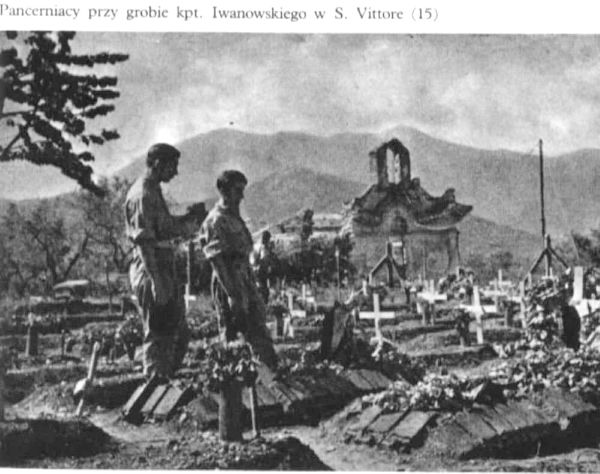
The Village of San Pietro Infine in WW2 history
But where and what is San Pietro Infine? And why visiting San Pietro Infine is so important?
In 1943, the village of San Pietro infine was tragically involved in the Italian Campaign because it was in a very strategic point for the Allied troops’ advance. Even if the opposed opinion of some experienced American soldiers, Clark ordered to attack and conquer San Pietro Infine, even if there were only less than four German Battalions barricaded in trenches and strongholds.
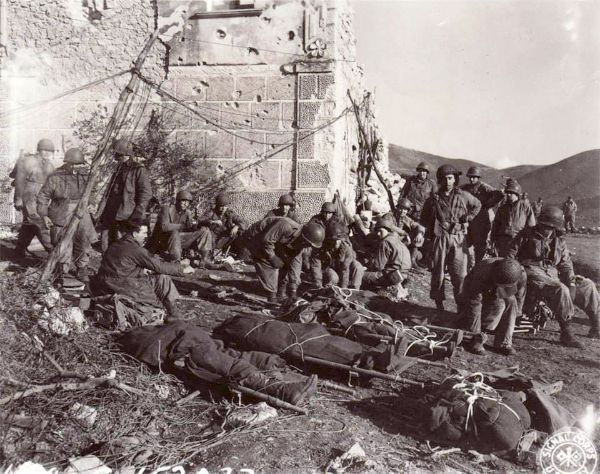
Visiting San Pietro Infine
On 7th and 8th December 1943 the American artillery bombed the German strongpoints with no results, also because the enemy artillery was on the top of Monte Lungo, exactly in front of Monte Sammucro and the village of San Pietro Infine, so the Germans had a very good view on the battlefield. Any Americans succeed in advancing more than 400-500 mt from the starting point. After losing so many lives in this battlefield, they attacked San Pietro Infine by tanks, and so 16 tanks moved along the Annunziata Lunga road to join the town centre. But the path was too narrow. 12 Tanks were neutralized and only 4 of them could go back.
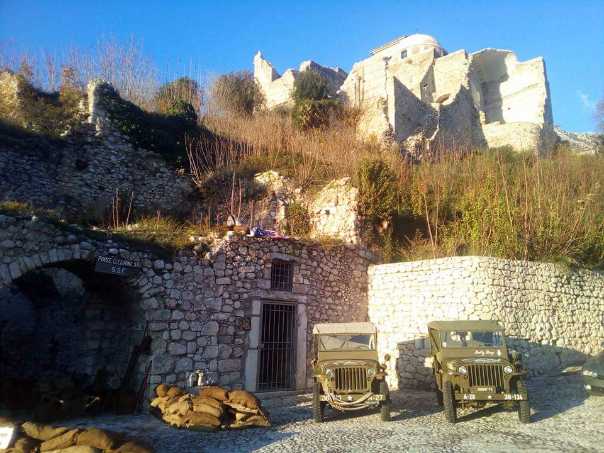
Visiting San Pietro Infine
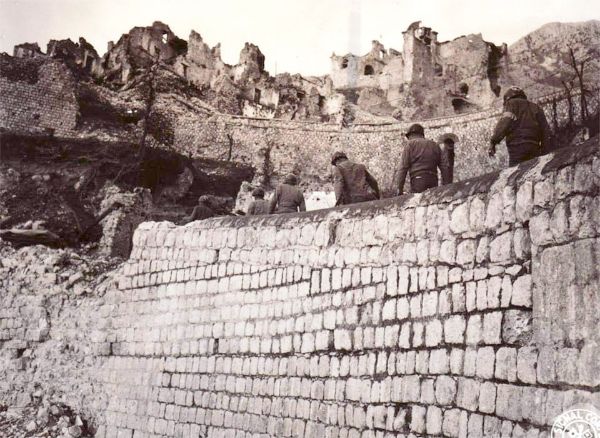
On 16th December, the Americans after a bloody attempt made by the Italians, conquered Monte Lungo, and the Germans decided to abandon San Pietro on 17th. John Huston and his troupe were the first to enter and film the village reduced to rubble On December 20th 1943 The American newspaper Daily News gave the notice in the headlines: “San Pietro Infine captured!”
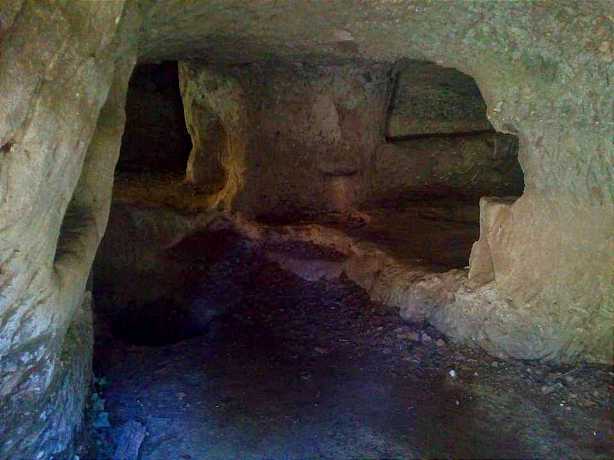
Visiting San Pietro Infine means also having a general idea about the drama of the civilians.
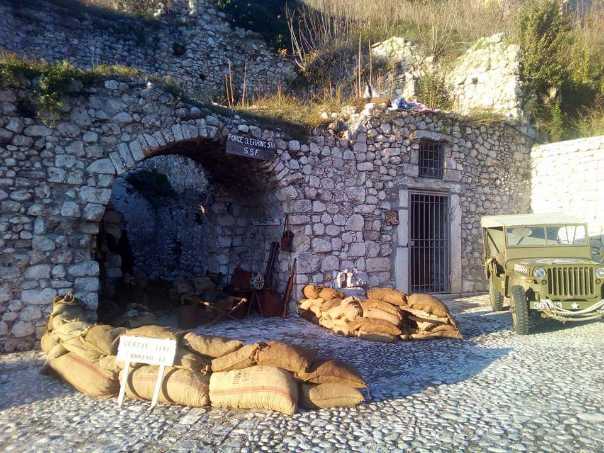
About 130 people of San Pietro Infine died because of the war. They tried to be in save, reaching the valley caves, realised during the II World War as a refuge from bombing. 500 People saved themselves inside these caves, in the western valley of the old village, and communicate each other. Outside we can see about 10 openings, but inside they are only a very long and dark cave. The village of San Pietro Infine is still there after about 80 years. The rubbles are partially still there, and the different shop, houses, churches are still visible between the vegetation. It is called the “Pompeii of Second World War”.
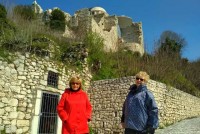
Visiting Sian Pietro Infine it’s also a way to remember an other great man: Ernie Pyle
But how we know all that? Because John Huston was not the only one on the Battlefield. There was also another very important man: Ernie Pyle, one of the most famous war reporter of the Second World War.
If President Truman once called Ernie Pyle ‘the spokesman of the ordinary American in arms’ it means that Pyle was a revolutionary war correspondent. It is very simple: he was not interested in war made by generals, he was there to describe the everyday life, the tribulations, the fraternalism between soldiers, the patriotism, the honour and the dignity of the US soldiers in WWII.
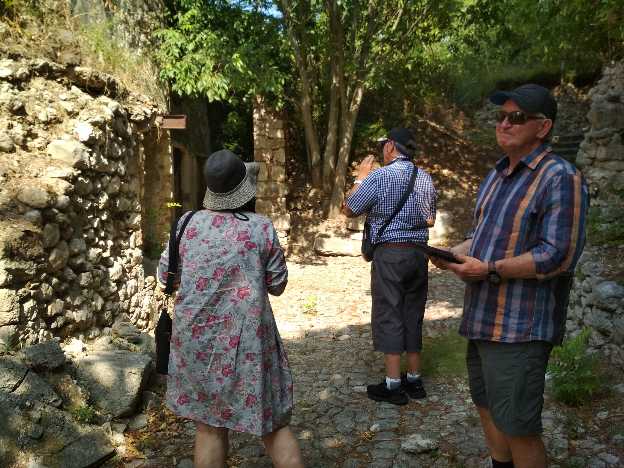
Ernie Pyle in the Battle of San Pietro Infine
He had the great idea to bring the hard reality of war into the homes of families worldwide. He was born in 1900 in Dana, Indiana. He graduated in the Indiana University and he started working as a reporter and a copy editor. He was a Pulitzer Prize winner for his reporting in 1944 and served as a war correspondent from 1935 to 1945 through most of the World War II. His columns appeared in about 200 newspapers Probably he followed the U.S.Army, to escape from a sad marriage with Geraldine Siebolds, he married in 1925.
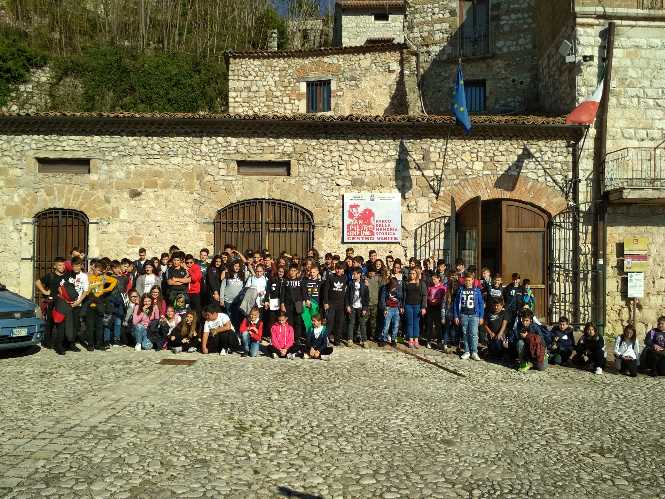
The Battle of San Pietro Infine
He became famous for his columns for the Scripps-Howard newspaper chain. He volunteered to deploy with the men of the Army’s 77th Infantry Division to report firsthand during the battle of Okinawa. On April 18th 1945 a Japanese machine gunner killed on the beach at Je Shima one of America’s most beloved reporter sending the entire nation into shock. He wanted to accompany the troops during the invasion of the small nearby island of Shima. The soldiers of the 77th Infantry Division made a wooden coffin for him and buried him wearing his helmet.
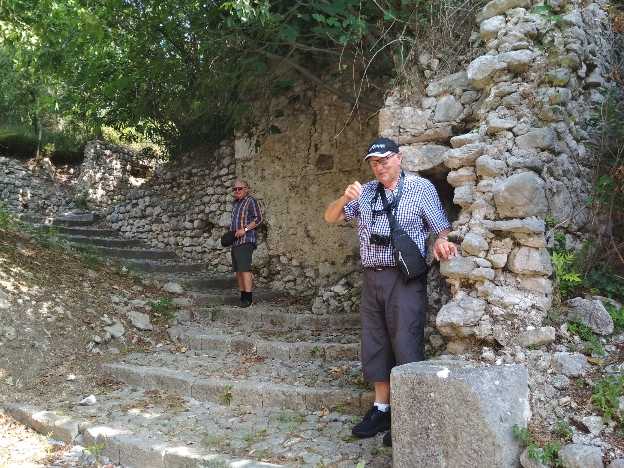
Ernie Pyle
On a permanent stone monument on Shima it was written: ‘at this spot the 77th Infantry Division lost a buddy Ernie Pyle 18 April 1945’. His new way or reporting things from the WWII continued to influence American war reporters during the Vietnam War and also beyond. He was burried in the National Memorial Cemetery of the Pacific in Honolulu.
Visiting San Pietro Infine:WHAT YOU MUST KNOW